3419 State St, Erie, PA 16508


By State Street Dental | August 14, 2026
Two patients ask me this question every month, and they’re usually asking for opposite reasons.
One has heard Invisalign fixed a friend’s jaw pain and wants to know if it’ll fix theirs. The other has TMJ problems and is scared that straightening their teeth will make things worse.
The honest answer sits between them, and it comes down to a single variable: how well you personally adapt to your bite changing.
What Aligners Actually Do to Your Bite
Here’s the mechanism nobody explains at a free consultation.
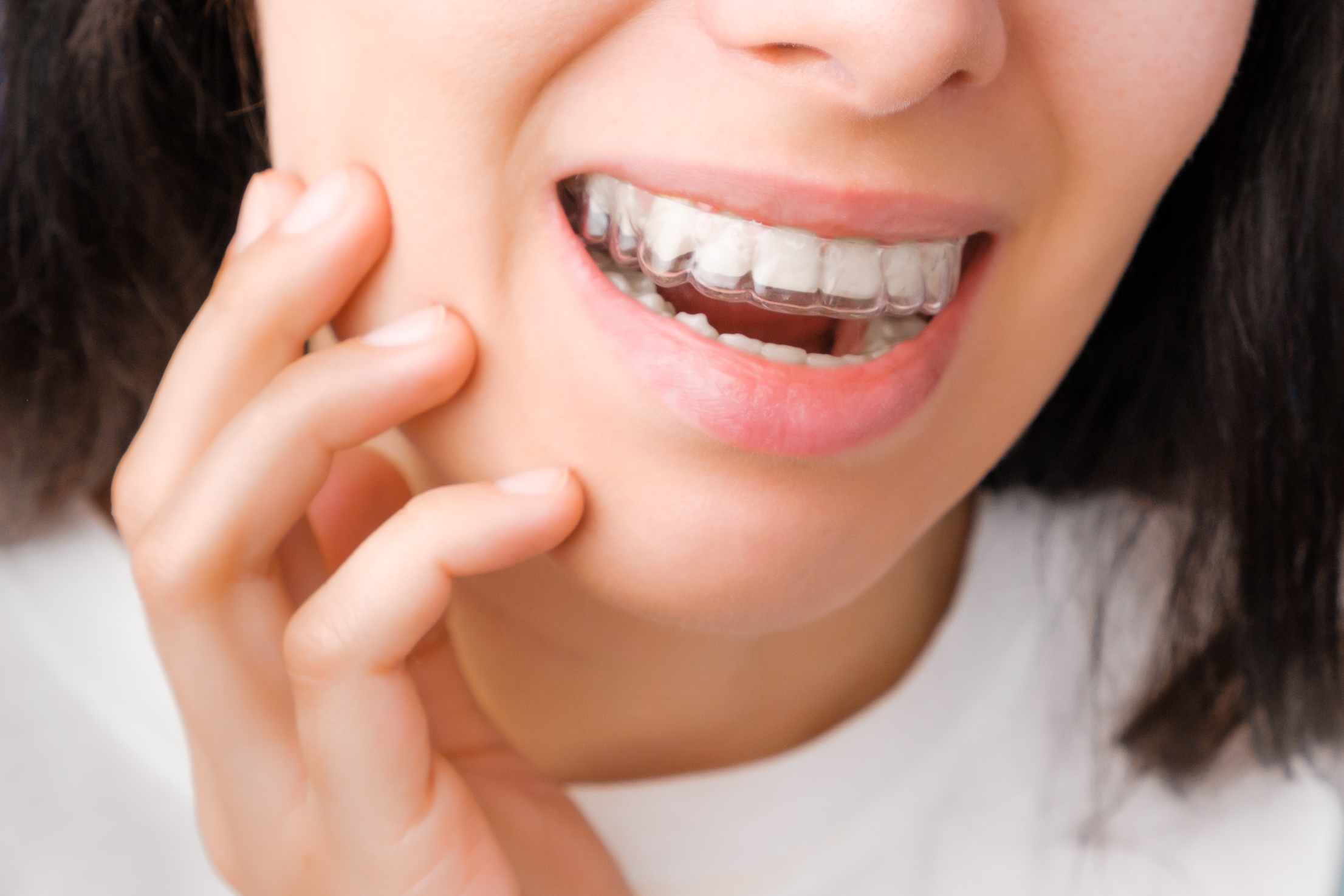
Wearing aligners means having a thin layer of plastic between your upper and lower teeth for about 22 hours a day. That does two contradictory things at the same time.
It cushions. Your teeth aren’t touching each other anymore. They’re touching plastic. Research on passive clear aligners found they were associated with a decrease in masticatory muscle activity in all participants. If you grind, you’re grinding plastic instead of enamel.
It changes your bite, constantly. A cohort study of 42 patients found a statistically significant decrease in occlusal contact area during active treatment, which only partially recovered afterward. Every two weeks, the way your teeth meet is slightly different from the week before.
For most people, that second part is a non-event. Your jaw adapts and you never think about it. For a smaller group, it’s exactly the thing that sets symptoms off.
The Reassuring Evidence
Let me give you the good news first, because it’s the larger share of the research.
A 2026 cohort study assessed 87 participants and clinically followed 20 aligner users against 20 controls. The finding: no association between aligner use and TMD or self-reported bruxism onset.
More interesting still, both groups showed reduced oral habits over time, and the authors suggested aligner therapy may actually increase awareness and control of parafunctional behaviors. Something about noticing plastic between your teeth makes you catch yourself clenching.
That 42-patient study I mentioned? No TMD signs or symptoms were detected at any timepoint, and chewing performance stayed stable.
So the default expectation for most people is neutral to mildly positive.
The Honest Caveat
Now the case that keeps me careful.
A published case report described a 56-year-old woman with crowding, missing teeth, generalized tooth wear, a vague history of jaw joint pain, and self-reported clenching. A few weeks into aligner treatment she developed acute facial pain. Her protocol had to be redesigned around her symptoms.
The authors’ conclusion is the sentence I’d underline: clinicians must consider aligners as a potential contributing factor in patients who adapt poorly to occlusal changes.
Notice the risk profile in that case. Existing wear. A clenching history. Prior joint symptoms. Missing teeth changing how forces distribute. That’s not a random person, that’s a specific pattern, and it’s identifiable before treatment rather than after.
Reviews also note that aligner insertion can transiently change masticatory muscle activity, though that effect typically settles as patients adapt.
What Changes How We Plan It
If you have a bruxism or TMJ history, your treatment should not look like a standard case.
Slower is better: Published guidance points toward reduced tooth movement velocity and smaller increments per tray for these patients. Fewer changes, more adaptation time.
Worn teeth need attachments: Grinding flattens tooth surfaces, and flat teeth give aligners less to grip. Composite attachments restore retention so the trays actually track.
Image the joint first: This is where our cone beam CT scan earns its keep. Flat X-rays don’t show you much about a jaw joint. 3D imaging does, and knowing what the joint looks like before you start beats guessing.
Have a plan for symptoms: If pain shows up in week six, the answer isn’t “push through.” It’s adjusting the protocol, which is exactly what happened in that case report.
One Thing Invisalign Is Not
It is not a TMJ treatment.
Straightening teeth may incidentally reduce some symptoms, particularly if an unbalanced bite is part of the picture. But if jaw pain is your primary complaint, that gets diagnosed and managed on its own terms through our TMJ and bruxism care first. Anyone selling aligners as a cure for jaw pain is telling you a story the evidence doesn’t support.
Order of operations matters. Calm the joint, then move the teeth.
Why We See a Lot of This in Erie
Erie clenches in the winter, and I don’t think that’s a coincidence.
We average around a hundred inches of snow. Anyone who’s driven I-90 or Route 5 through a lake effect band knows what your hands and jaw are doing during that drive. Add five months of gray, the holidays, and shift work at a lot of local employers, and January through March is reliably when jaw complaints spike in this office.
If you’re planning to start Invisalign and you already grind, that seasonal pattern is worth planning around rather than discovering.
We treat patients from across Erie, Millcreek, Harborcreek, Fairview, Girard, Waterford, Edinboro, North East, and Summit Township, and this conversation comes up constantly.
Schedule a consultation at our State Street office, or meet our dentists first. You can also read more about Invisalign before you come in.
Frequently Asked Questions (FAQ’s)
Can Invisalign cause TMJ problems?
Usually no, since cohort studies found no association between aligner use and TMD onset, though a small number of patients who adapt poorly to bite changes can develop symptoms.
Does Invisalign help with teeth grinding?
It can reduce enamel damage by separating the teeth, and research found passive aligners decreased masticatory muscle activity in all participants.
Can you get Invisalign if you have TMJ?
Yes, though jaw symptoms should be evaluated and stabilized first, and treatment should use slower tooth movement and smaller increments.
Do aligners work as a night guard?
They provide a physical barrier that protects enamel, but they are not a substitute for a properly designed night guard after treatment ends.
Should I stop Invisalign if my jaw starts hurting?
Don’t stop on your own, but contact your dentist promptly, since the protocol can usually be adjusted rather than abandoned.