3419 State St, Erie, PA 16508


By State Street Dental | September 7, 2026
If you notice tiny lines on your teeth, it is understandable to wonder whether your tooth is actually cracked.
The good news is that not every visible line means you have a serious cracked tooth. Many adults have tiny enamel cracks called craze lines. These are common, usually very shallow, and typically do not cause pain.
However, a crack that extends deeper into the tooth is different. A true cracked tooth can cause pain when chewing, temperature sensitivity, and other symptoms and may require prompt dental treatment. The American Association of Endodontists (AAE) distinguishes craze lines from deeper types of tooth fractures based on how far the crack extends into the tooth.
So, how can you tell the difference?
What Are Craze Lines?
Craze lines are tiny cracks that affect only the outer enamel of a tooth.
They are extremely common in adult teeth and generally do not cause pain or affect the tooth’s function. Because they are limited to enamel, they are very different from a crack that extends toward the inner portions of the tooth.
You may notice craze lines when looking closely at your teeth, particularly under bright lighting.
They can appear as:
- Very thin vertical lines
- Hairline cracks
- Faint lines running along the enamel
- Small lines that are easier to see when the tooth is dry or illuminated
In many cases, craze lines do not require treatment. Your dentist can examine them and determine whether they are simply cosmetic or whether additional evaluation is needed.
What Is a Cracked Tooth?
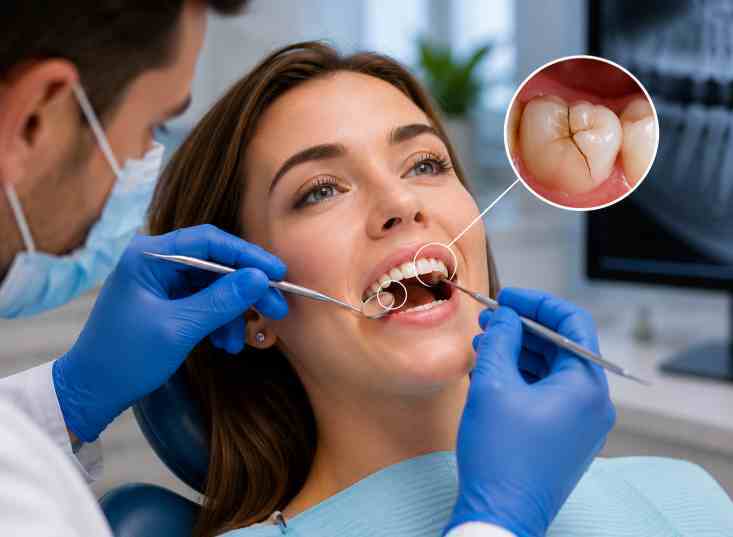
A cracked tooth involves a crack that extends deeper than the outer enamel.
According to the AAE, a cracked tooth typically extends from the chewing surface toward the root without completely separating the tooth into pieces. The crack may progress over time, and the treatment depends on its location and extent.
Unlike craze lines, a cracked tooth may cause noticeable symptoms.
Common signs include:
- Sharp pain when biting or chewing
- Pain when you release your bite
- Sensitivity to hot or cold foods
- Pain that comes and goes
- Swelling around the tooth
- A feeling that one particular tooth hurts when you chew
A cracked tooth can sometimes be difficult to identify because symptoms may be intermittent rather than constant.
Craze Lines vs. a Cracked Tooth: What’s the Difference?
The easiest way to understand the difference is to consider depth, symptoms, and location.
| Craze Lines | Cracked Tooth |
| Limited to tooth enamel | Extends deeper into the tooth |
| Very common in adults | Less common but potentially more serious |
| Usually painless | May cause sharp or intermittent pain |
| Usually does not affect function | Can affect chewing |
| Often mainly a cosmetic concern | May require dental treatment |
| Usually does not require treatment | Should be evaluated by a dentist |
The important point is that you cannot always determine the severity of a crack just by looking at it. A dentist may need to examine the tooth and perform specific tests to determine what is happening.
What Causes Tiny Cracks in Teeth?
Teeth are strong, but they experience repeated forces every day.
Over time, several factors can contribute to cracks or tooth fractures.
Normal Wear and Aging
Years of chewing and exposure to biting forces can make teeth more susceptible to cracks.
Craze lines can naturally become more noticeable as you get older and may simply reflect everyday wear.
Biting Hard Foods
Hard foods and objects can place significant force on teeth.
Ice, hard candy, popcorn kernels, and similar items can increase the risk of damaging a tooth.
Teeth Grinding and Clenching
Repeated clenching or grinding can put additional stress on teeth. If you grind your teeth at night, your dentist may recommend ways to protect your teeth from excessive forces.
Large Fillings or Previous Dental Work
A tooth that has undergone extensive dental treatment may have different structural characteristics than an untouched tooth. In some situations, a heavily restored tooth may be more susceptible to fracture.
Dental Trauma
A fall, sports injury, accident, or blow to the mouth can cause a tooth to chip or crack.
Does a Cracked Tooth Always Hurt?
No.
One of the confusing things about cracked teeth is that some cracks may cause few or no symptoms initially.
A tooth can develop a crack and remain relatively comfortable until the crack progresses or begins irritating the tissues inside the tooth. The AAE notes that cracked teeth can produce inconsistent symptoms, including pain during chewing and sensitivity to temperature changes.
That is why a visible crack should not automatically be dismissed simply because it does not hurt.
If you are unsure whether the line you see is a harmless craze line or something more significant, an examination is the safest way to find out.
When Should You See a Dentist?
Make an appointment with a Dentist in Erie, PA if you notice a new crack accompanied by symptoms such as:
- Pain when biting down
- Pain when releasing your bite
- Persistent tooth sensitivity
- Swelling around the tooth
- A sharp edge or piece of tooth that has broken
- Pain that keeps returning
- A crack that appears to be getting larger
If you experience severe dental pain, facial swelling, or signs of infection, seek prompt dental care.
Early evaluation is particularly important when a deeper crack is suspected. A cracked tooth does not heal like a broken bone, and untreated cracks can sometimes progress.
How Is a Cracked Tooth Treated?
Treatment depends on the type, location, depth, and condition of the tooth.
Depending on the situation, treatment may include:
Monitoring
If your dentist determines that a line is simply a craze line and the tooth is healthy and symptom-free, no treatment may be necessary.
Dental Bonding
For certain minor chips or cosmetic imperfections, tooth-colored bonding may improve the appearance of the tooth. Bonding can also conceal visible craze lines when appropriate.
Dental Crown
A crown may be recommended when a tooth has significant structural damage and needs additional protection. State Street Dental offers porcelain crowns designed to restore and protect damaged or weakened teeth.
Root Canal Treatment and Crown
If a crack extends into the pulp and the tooth remains treatable, root canal treatment followed by a protective crown may be appropriate. The exact treatment depends on the location and severity of the fracture.
In some cases, a crack that extends below the gum line may make the tooth impossible to save. This is one reason early evaluation matters.
How Can You Prevent Tooth Cracks?
You cannot prevent every crack, but you can reduce unnecessary stress on your teeth.
Try to:
- Avoid chewing ice or very hard objects
- Do not use your teeth to open packages
- Wear a properly fitted mouthguard during contact sports
- Address nighttime grinding or clenching
- Maintain regular dental checkups
- Seek care if you notice unexplained tooth pain or sensitivity
Regular dental examinations can also help identify changes before they become more complicated. State Street Dental provides comprehensive exams and uses digital X-rays when needed as part of evaluating patients’ oral health.
Your Erie Dentist for Cracked and Damaged Teeth
If you have noticed a tiny line on your tooth, there is no need to panic but it is also not a good idea to diagnose the crack yourself.
Many visible lines are harmless craze lines, while deeper cracks can require treatment to protect the tooth.
State Street Dental provides comprehensive preventive, restorative, cosmetic, orthodontic, and emergency dental care in Erie, PA. The practice offers services including dental crowns, fillings, implants, emergency dentistry, and other treatments that may be relevant when a tooth is damaged.
If you are experiencing pain, sensitivity, or other symptoms along with a visible crack, a dental examination can help determine exactly what is happening and what treatment, if any, is appropriate.
Conclusion
Seeing tiny lines on your teeth does not automatically mean you have a serious cracked tooth. Craze lines are shallow enamel cracks that are common in adults and usually do not cause pain. A true cracked tooth extends deeper and may cause pain when chewing, temperature sensitivity, or other symptoms.
Because the appearance of a crack does not always reveal how deep it is, it is best to have a dentist evaluate a new or symptomatic crack rather than waiting for it to worsen.
Frequently Asked Questions (FAQs)
1. Are tiny cracks in teeth normal?
Many adults have craze lines, which are tiny enamel cracks that are common and usually harmless.
2. How can I tell if a tooth crack is serious?
Pain when biting, temperature sensitivity, swelling, or recurring discomfort may indicate a deeper crack that needs dental evaluation.
3. Can craze lines turn into a cracked tooth?
Craze lines are limited to enamel, but teeth can develop deeper fractures for other reasons, so a dentist should evaluate concerning changes or symptoms.
4. Do craze lines need to be repaired?
Usually not if they are limited to enamel and the tooth is healthy and symptom-free, although cosmetic treatment may sometimes be considered.
5. What should I do if I think I have a cracked tooth?
Avoid chewing hard foods on that tooth and schedule a dental examination, especially if you have pain or sensitivity.